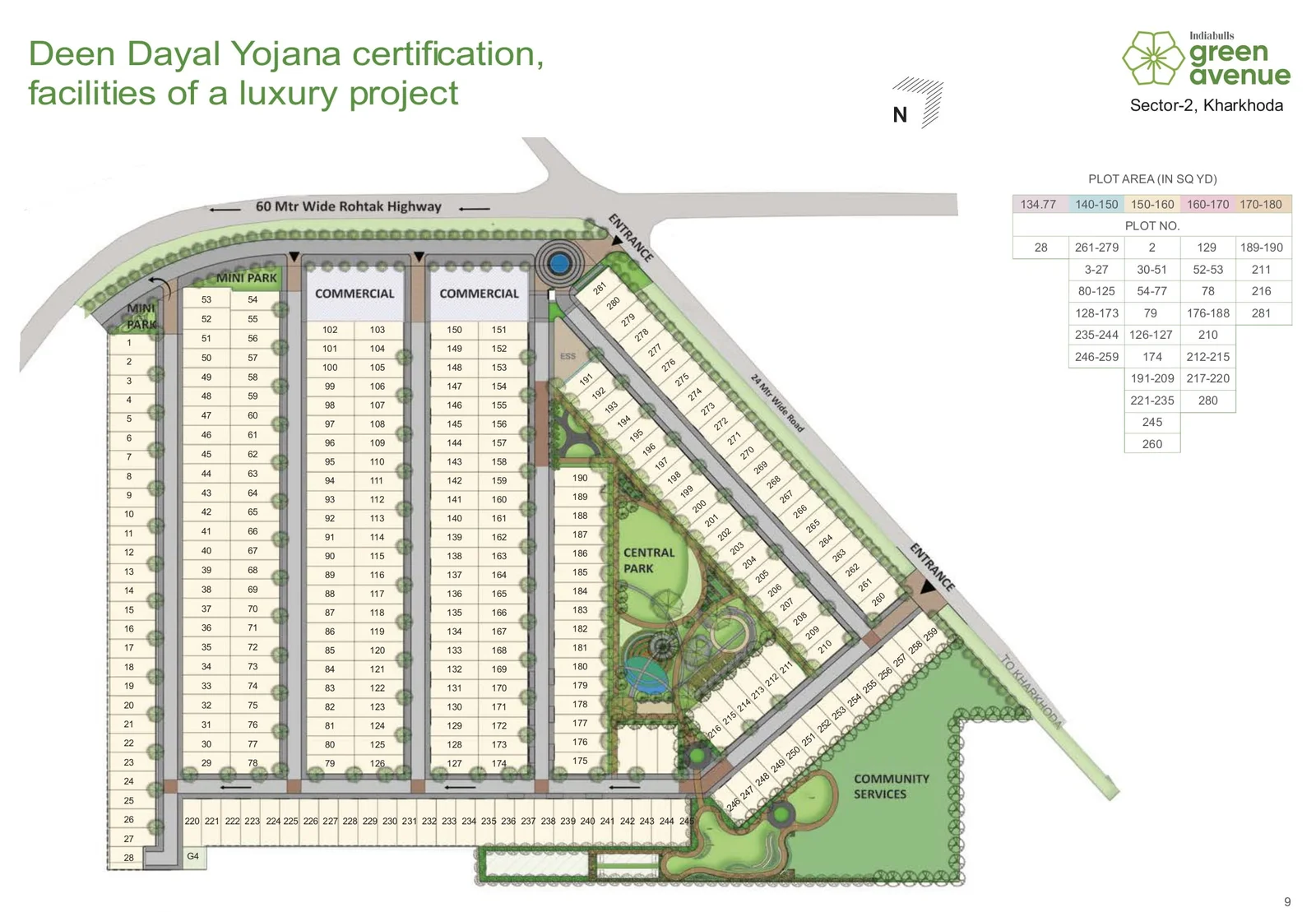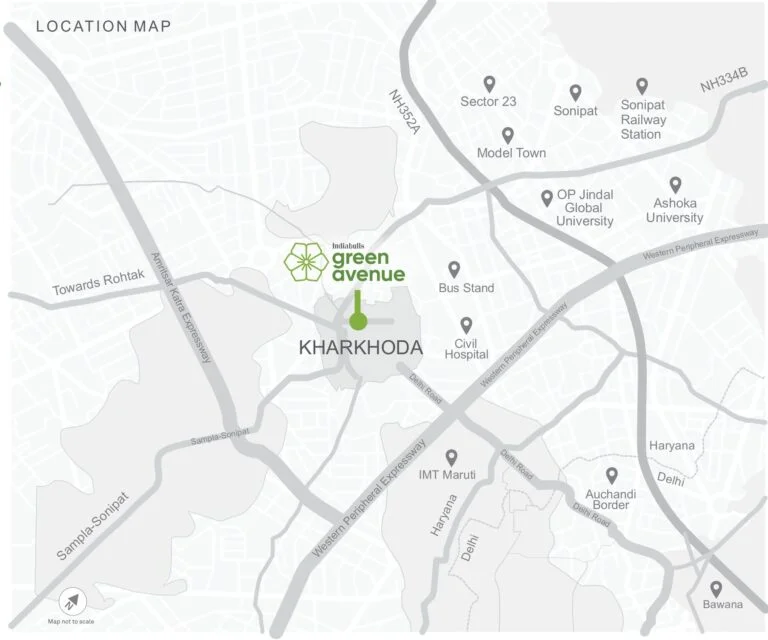
Deen Dayal Jan Awas Yojna, an affordable housing scheme of state Government of Haryana has been launched by Prime Minister Narendra Modi on 1st November on Haryana Golden Jubilee Day. Investing in Deen Dayal Jan Awas Yojana (DDJAY) plots is a smart and secure decision that promises high returns with low risk. These fully developed properties come with attractive amenities, and the DDJAY policy of the Haryana government allows for separate registration and an easy process for building additional floors.
All of these features make DDJAY plots a valuable residential asset for comfortable living, a relaxing holiday destination, or a profitable source of income if you decide to build additional floors to sell or rent.
| Sl. No. | Plot Size (SQYDS) | Rate (₹/Sq.Yd.) | BSP (₹) | Registration (₹) | Within 7 Days (10%) | Within 30 Days (40%) | Within 60 Days (20%) | Within 90 Days (20%) | At Possession (10%) |
|---|---|---|---|---|---|---|---|---|---|
| 1 | 128.307 | ₹55,500 | ₹7,121,039 | ₹49,000 | ₹663,104 | ₹3,196,889 | ₹1,424,208 | ₹1,424,208 | ₹712,104 |
| 2 | 144.004 | ₹55,500 | ₹7,992,222 | ₹49,000 | ₹750,222 | ₹3,196,889 | ₹1,598,444 | ₹1,598,444 | ₹799,222 |
| 3 | 144.049 | ₹55,500 | ₹7,994,720 | ₹49,000 | ₹750,472 | ₹3,197,888 | ₹1,598,944 | ₹1,598,944 | ₹799,472 |
| 4 | 156.806 | ₹55,500 | ₹8,702,733 | ₹49,000 | ₹821,273 | ₹3,481,093 | ₹1,740,547 | ₹1,740,547 | ₹870,273 |
| 5 | 165.238 | ₹55,500 | ₹9,170,709 | ₹49,000 | ₹868,071 | ₹3,668,284 | ₹1,834,142 | ₹1,834,142 | ₹917,071 |
Note:
(1) Registration Stamp Duty, GST Charges and Possession Charges or any other legal charges levied by Govt. shall be payable by allotee/Applicant as per norms
(2) Possession charges shall be paid at the time of possession.
Sector 11 A, Kharkhoda, Sonipat, Haryana
+91 88008 38174
info@deendayalawasyojana.org
The PPP model allows the government to leverage the expertise, resources, and efficiency of the private sector in implementing the housing project. This collaboration ensures that the project is executed effectively and efficiently.
By partnering with private developers, the government can reduce the financial burden on itself. Private developers often bring in capital investment, innovative technologies, and cost-effective construction methods, leading to cost savings for the government.
The involvement of private developers can expedite the pace of project delivery. Private entities are often more agile and responsive, leading to quicker implementation of housing projects compared to solely government-led initiatives.
Sharing the risks between the public and private sectors is a key advantage of the PPP model. Private developers assume certain risks associated with the project, such as construction delays or market fluctuations, thereby mitigating the burden on the government.
Private developers are incentivized to maintain high-quality standards in order to attract buyers and tenants. This ensures that the housing units developed under DDJAY meet prescribed quality benchmarks, benefiting the residents.
PPP arrangements encourage innovation and creativity in project design, financing, and management. Private developers may introduce new technologies, design concepts, or financing mechanisms that enhance the overall effectiveness of the housing project.
Collaborating with private developers provides an opportunity for capacity building within the government agencies involved in housing development. The government can learn from the expertise and practices of private partners, strengthening its own capabilities in urban development.
PPP models often emphasize sustainability and environmental considerations, leading to the development of eco-friendly and energy-efficient real estate projects that align with long-term development goals.